


Floreat House: A New Chapter in Highfield School’s History
27th August 2026
Estimated reading time: 5 minutes
Walk around any school and some buildings will stand out – not for how they look, but for what’s happened inside them over the years.
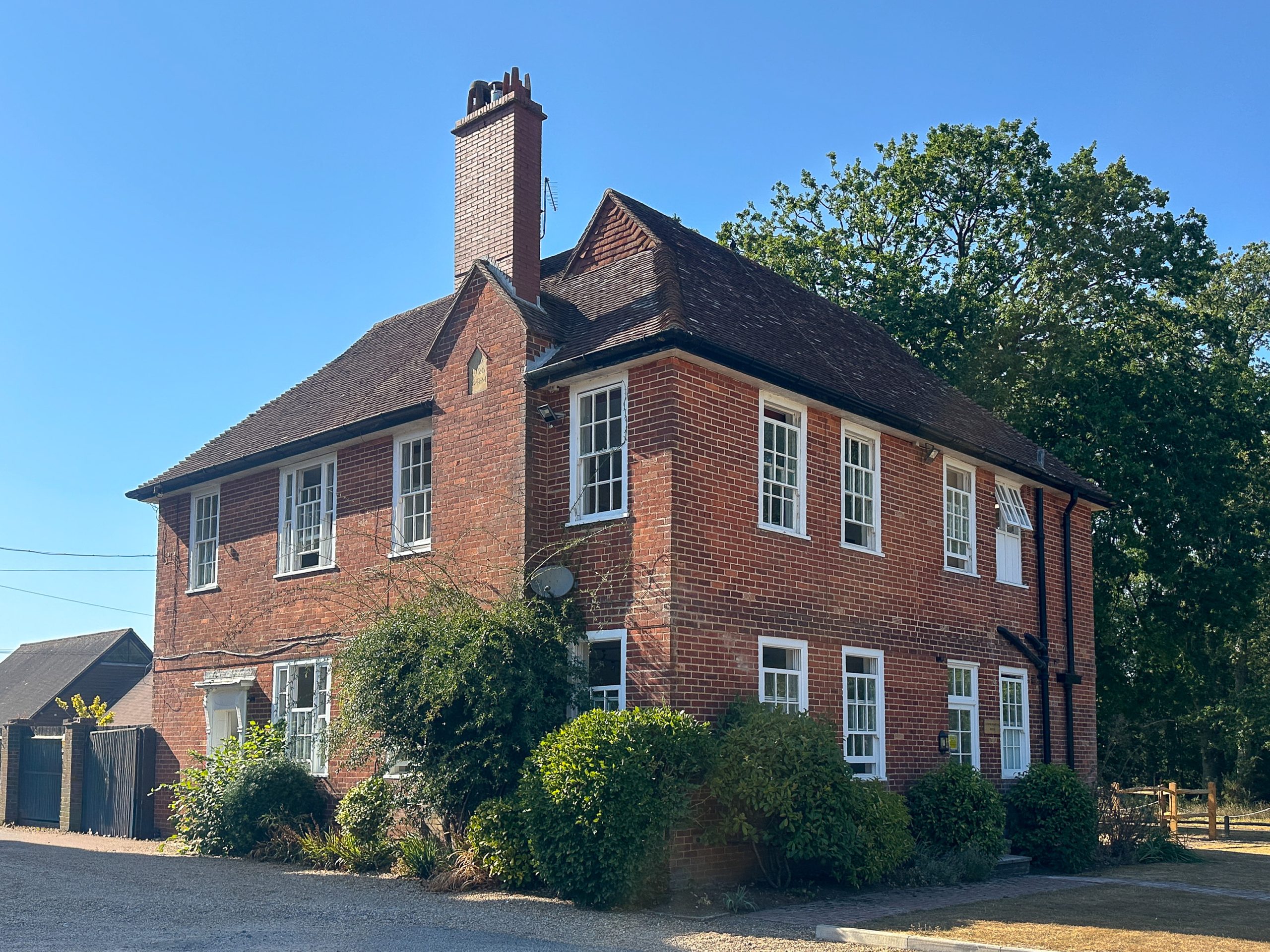
At Highfield, one of those buildings now stands at a turning point in its 100-year history. Until now, it’s been our junior boarding house. From October half term, it will be given a new name and a new purpose, becoming Floreat House and beginning the next chapter of its story.
Floreat takes its meaning from the Latin for “may it flourish” – and it’s a fitting name for what the building is becoming. But to understand why, it helps to know where it’s come from.
A building with a history
The building was built in 1926 as the school sanatorium – the place children were taken when they were unwell and needed looking after away from the busyness of the main school. Even the architecture was shaped around that purpose. At a time when keeping a sanatorium clean was paramount, the building was designed with softened corners and rounded edges, leaving fewer places for dust and germs to gather. From the very beginning, care was quite literally built into its walls.
In the 1980s, as the school’s needs changed, it became the junior boarding house, home to some of our youngest boarders for the best part of forty years. Ask anyone who worked there and the memories come thick and fast: children learning to knit of an evening, the Junior House Mistress reading The Witches aloud, a CD player in the corner playing stories as the children drifted off to sleep, duvets and beanbags dragged into the playroom – just to be close together. It had its structure, of course – nail checks, hair washing, the small routines any parent would recognise from home, but underneath that structure was something closer to family life than institutional life. A place to belong, in the truest sense.
Junior boarding looks different now to how it did when the house first opened its doors, and as that need has changed, so too must the building’s purpose. But look closely and the thread running through every version of this building is the same one: children being looked after, known and cared for, in whatever way that particular moment required.
It felt right that its next role – and its new name – should bring that history full circle.
One home, many kinds of support
Spend any amount of time in a school and one thing becomes very clear: no two children experience learning in quite the same way.
Floreat House will bring together a wide range of support and enrichment for children across Highfield in one dedicated, welcoming space. It’s been designed around a simple principle: children learn best, and flourish, when they feel happy, understood and well supported.
What that looks like will be different for every child, and it will change as they grow. Sometimes it’s a bit of extra support with something they’re finding difficult. At other times, a teacher might spot a particular aptitude and know that child is ready for more challenge. And sometimes what a child needs most is simply a quiet place to gather themselves before returning to the classroom.
Floreat House will give all of those things a home. Academic enrichment and extension groups will give children the chance to develop an area of learning further, while pastoral care and emotional wellbeing provision will offer support at the times they need it. Our learning support will also be based here, alongside dedicated spaces for Speech and Language Therapy, Occupational Therapy and Emotional Therapy.
Flexible teaching and meeting rooms will mean the building can be used in different ways throughout the day, to give staff, families and external professionals an appropriate place to work together when needed.
Bringing these different areas together means we can respond more flexibly to the individual child. The same child might need additional support in one area and greater challenge in another, and what they need from us today may be different in a year’s time.
That’s really the thinking behind Floreat House. Knowing our children well enough to recognise what they need, and giving them the support and opportunities to flourish.
Built to keep evolving
Perhaps the most telling thing about Floreat House is that it hasn’t been designed as a finished, static space. Like the building itself, it’s been created with room to grow.
The classroom will, of course, remain where most school life happens. Floreat House adds something different: dedicated spaces that can be adapted according to how they’re being used. A room might need to work very differently from one day to the next, and the building has been planned with that flexibility in mind.
That matters for the future too. We can’t know exactly what children at Highfield will need from this space in ten or twenty years’ time. What we can do is create a building capable of changing with them.
That commitment to adapting and renewing our buildings is part of a wider investment in Highfield’s future. As school owner Bill Mills has often reflected, continued renewal is the mark of a school that is looking ahead. Investing in the fabric of Highfield is a statement of confidence in its future and our commitment to the generations of children still to come.
In many ways, that’s what this building has always done: changed and adapted to meet the needs of Highfield children throughout its 100-year history.
The next stage in the building’s story
When we look back at its history, perhaps Floreat House isn’t such a departure after all.
In 1926, this was somewhere children could be cared for when they were unwell. For the decades it spent as our junior boarding house, it became somewhere that felt like home when children were away from theirs. Now, as Floreat House, care will look different again.
The building has changed before, and no doubt it will continue to change. But the thread running through its history has remained remarkably constant.
It was built as a place to care for children. Almost 100 years later, that’s exactly what Floreat House will continue to do.