


Reading for Pleasure: Small Habit, Big Impact. Why Reading for Pleasure Matters More Than Ever.
2nd March 2026
by Kerri Wilkes, Deputy Head
World Book Day, the National Year of Reading and what it means for our children
World Book Day is nearly here, as always falling on the first Thursday in March, but this year it sits within something even bigger: the National Year of Reading. This nationwide initiative, supported by organisations such as the National Literacy Trust, has been launched in response to a recognised decline in reading for pleasure among both children and adults.
That phrase, reading for pleasure, is important.
We know reading helps children learn. We see it every day in school. But research over the past two decades has made something very clear: when children read because they want to, not because they have to, the impact reaches far beyond English lessons.
Large-scale studies, show that children who read high-quality books regularly perform better in school assessments. Importantly, this isn’t just about English. Strong reading habits are linked to higher GCSE attainment in all academic and creative subjects. Children who read outside of school every day score significantly higher than those who rarely read.
But academic outcomes are only part of the story.
Reviews of reading research consistently highlight a wide range of benefits: broader vocabulary, stronger writing skills, deeper comprehension, improved general knowledge and increased confidence. Reading fiction helps children develop empathy and emotional understanding. Non-fiction opens doors to new interests and possibilities. Recent findings from the National Literacy Trust also suggest that children who enjoy reading are far more likely to report good mental wellbeing.
In short, reading for pleasure supports academic progress, emotional development and future life chances.
If the evidence is so compelling, why the need for a National Year of Reading? Because, despite the benefits, reading for pleasure among children in England has declined in recent years. Compared with many of their international peers, our children report reading less frequently outside school. That matters, and it gives schools and families an opportunity to work together.

Reading at Highfield and Brookham
At Highfield and Brookham, we believe that reading for pleasure doesn’t happen by accident. It grows in a culture where books are visible, valued and genuinely enjoyed.
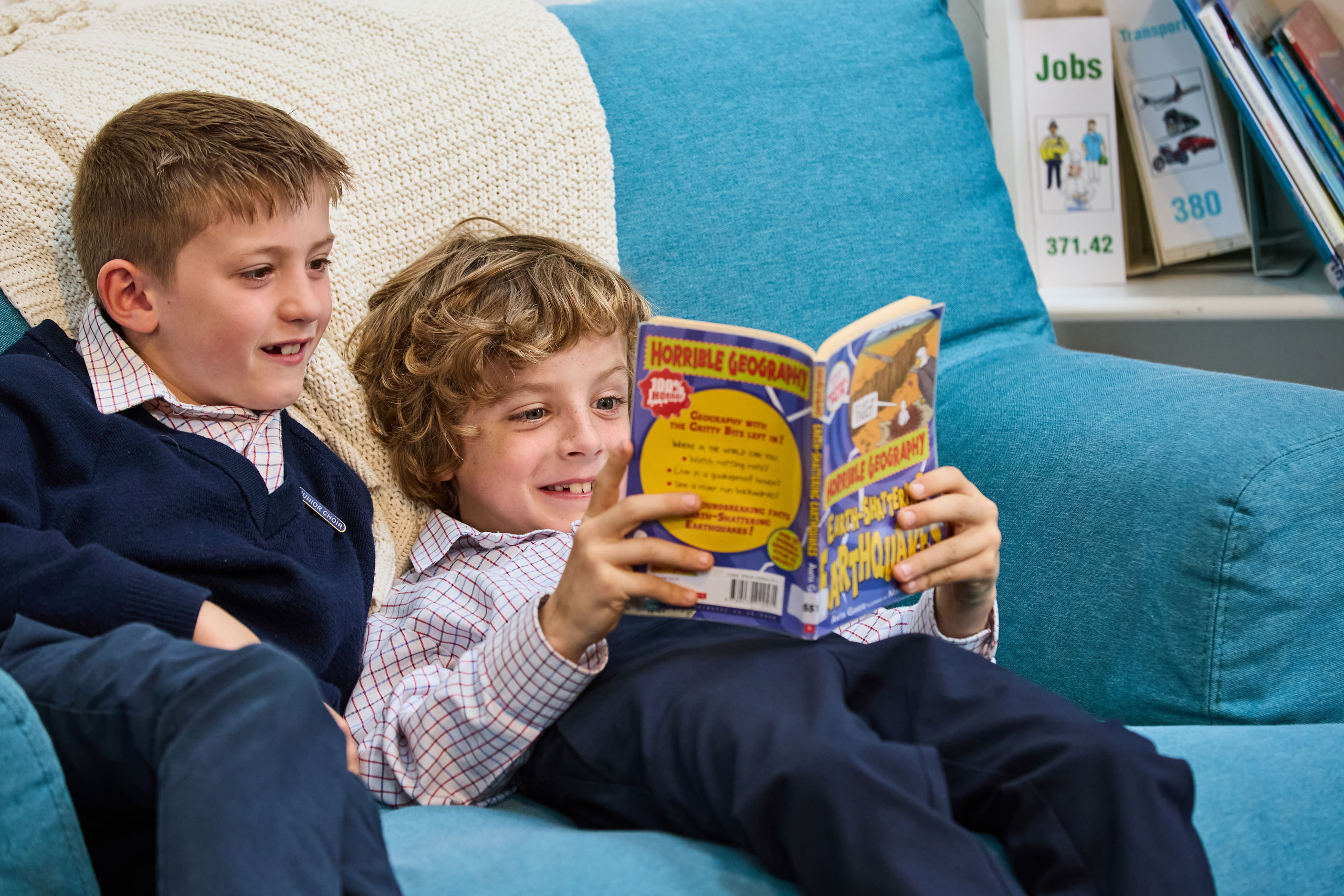
One of the simplest, and most powerful, ways we nurture this habit is through ERIC: Everyone Reading In Class. For the first fifteen minutes of each afternoon, the school pauses. Pupils read independently. Teachers read too. There is no rush, no worksheet, no follow-up task. Just sustained, protected reading time.
This daily routine sends a clear message: reading matters. It is not a filler activity. It is not something squeezed in when everything else is done. It is part of who we are.
Interestingly, this quiet reading time also serves another purpose. After a busy break, it provides a calm reset, helping children regulate, settle and refocus for the afternoon ahead.
Choice plays a crucial role in reading motivation. Research consistently shows that interest and autonomy are key drivers of engagement. For that reason, our libraries are intentionally diverse and vibrant. Alongside classic fiction sit graphic novels, joke books, sports writing, poetry, biographies, “how things work” books and beautifully illustrated non-fiction. Easy reads are valued just as highly as more challenging novels. If a child is reading, and enjoying it, that is what matters.
We invest significantly in keeping our collections fresh and exciting. Dr Whitfield, our librarian carefully researches new publications and works closely with staff to ensure quality texts are always available. Through our subscription to the Hampshire Library Association, fiction and non-fiction titles are rotated regularly in our Pre-Prep library, ensuring variety and exposure to new authors and ideas. The Prep Library is the physical and intellectual centre of our school and showcases our commitment to reading. Children are welcome to use the library at breaks and lunchtimes whenever it is staffed.
Reading is woven into school life in many other ways:
- The Reading Certificate is a key element of our KS3 English curriculum and will become an integral part of our new Highfield Leavers’ Awards.
- Library lessons are scheduled regularly for Prep school classes.
- Class texts for KS3 pupils are the property of the pupils – encouraging them to start building a library of their own.
- Class readers are shared at the end of the day.
- Older pupils act as reading buddies. For example, Year 7 visit Year 4 weekly to read and hear readers.
- Reading ambassadors champion their favourite books.
- Holiday reading challenges are regularly set.
- Library displays showcase what teachers are currently reading.
- Informal book talks and peer recommendations encourage the exchange of reading ideas.
- Boarders routinely read before lights out and our youngest boarders listen to an audio book once the lights have been turned off.
Perhaps most importantly, children are more likely to become lifelong readers when they see reading valued by the adults around them.
We are also mindful that motivation should come from curiosity and connection, not simply from collecting certificates or racing through levels. Encouraging children to read widely, without overly restricting choice, helps build confidence and prevents reading from becoming performative.
World Book Day at Highfield and Brookham is therefore about much more than creative costumes. It is about celebrating the transformative power of reading and reminding children that books can open doors to new worlds, and new futures.
The Role of Families
While schools play a vital role, research consistently highlights the importance of the home environment. Studies show a positive relationship between the number of books in the home and attainment. Children who have books of their own tend to read more frequently and enjoy reading more deeply.
Perhaps most importantly, children are more likely to become lifelong readers when they see reading valued by the adults around them.
Fostering a love of reading is a shared responsibility, and it doesn’t require hours of spare time or specialist knowledge. Small, consistent habits make a difference.
Top Tips for Supporting Reading at Home
Read together.
Whether your child is exploring picture books or reading independently, sharing stories provides valuable time to connect. Ask questions, laugh at funny moments and talk about characters. Your child is never too old to read to.
Share reading
Reluctant readers can often be encouraged by reading with adults. You read aloud for a couple of pages, then let your child take over for a bit. It keeps the story going and can be a way of building up to reading independence
Make it routine.
Ten minutes a day really does matter. Choosing a regular time, perhaps before bed, helps reading become part of everyday life. And then that 10 minutes has a good chance of turning into a habit which can become a desire to read independently for fifteen, twenty, even thirty minutes every evening.
Bring stories to life.
Different voices and sound effects might feel theatrical, but children love them. Audiobooks are also a wonderful way to experience storytelling together.
Follow their interests.
All reading counts. Sports pages, recipes, magazines, instruction manuals — tapping into your child’s passions builds engagement and confidence.

As we approach World Book Day and reflect on the National Year of Reading, the message is simple but powerful: when children enjoy reading, the benefits ripple through every area of their lives.
Reading builds vocabulary, resilience, imagination and empathy. It strengthens academic performance. It supports wellbeing. It shapes futures.
At Highfield and Brookham, we are committed to creating a culture where every child has the opportunity to discover the joy of reading, and to thrive because of it.