


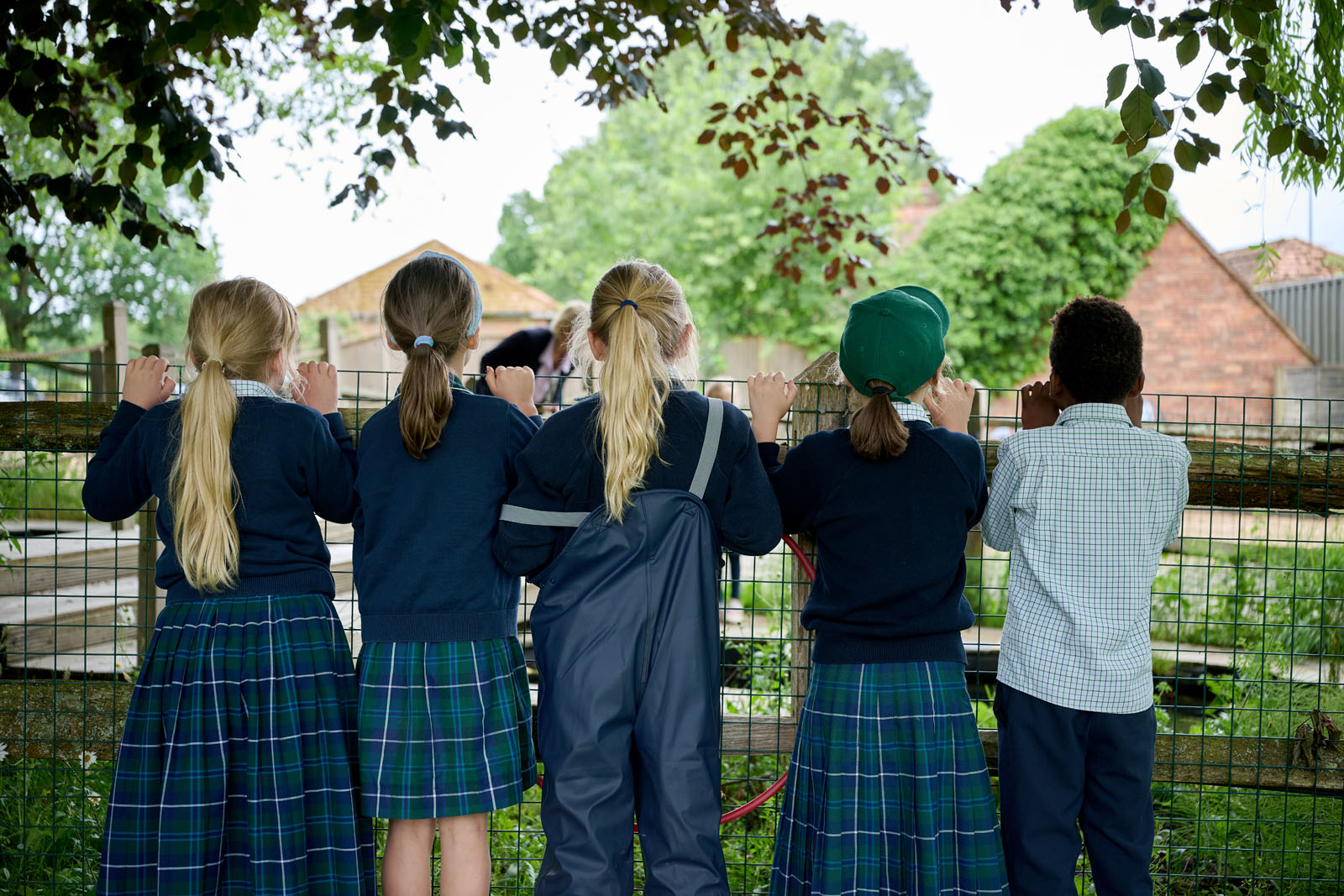
Changing the picture: our new approach to sharing school life
2nd September 2026
Estimated reading time: 6 minutes
There’s nothing quite like seeing your child’s face in a school photo — caught mid-jump at sports day, concentrating hard over a piece of art or beaming after performing on stage. Photos like these matter. They capture moments parents can’t always be there for and they let families feel connected to school life, even from a distance.
So when we tell you we’re moving away from publishing clear, identifiable photos of children’s faces online, we know that might feel like a loss. We want to explain why we’re doing it, because the reasoning matters just as much as the decision itself.
The world our photos live in has changed
Concerns about how photographs could be misused once they’re online are nothing new. Everyone has long known that an image, once published, can be copied, saved and shared far beyond its original purpose. What’s changed is the scale of that risk, and how effort it now takes.
Technology that lets images be manipulated, including AI tools capable of creating generated imagery from an ordinary photograph, has become easier to access than most of us would like to believe. Once an image is online, it can be taken and used in ways that are completely outside our control.
This isn’t a hypothetical risk. It’s a real and growing safeguarding concern for schools everywhere, and it’s one we take extremely seriously.
Safeguarding always comes first
Everything we do, from how we teach to how we care for children in the corridors and on the playing fields, is guided by one principle: safeguarding comes first. That principle doesn’t stop at the school gates. It extends to how we handle images, because a photograph is, in its own way, a piece of someone’s identity — and protecting that identity is part of protecting them.
Safeguarding also means thinking ahead. As the digital world changes, so too must the way we think about protecting children within it. We don’t want to wait for something to happen before we respond; we want to make thoughtful choices now that reflect the world our children are growing up in. We want to be at the forefront of that thinking, leading by example and being willing to change our own practice when we believe we could do better.
What we’re changing, and why it still lets us celebrate your children
We’re not stepping away from celebrating school life — quite the opposite. We still want to share the joy of a nativity performance, the pride of a sports day medal, the delight in a finished piece of artwork. What we’re changing is how we do it, so that celebration and safety can sit comfortably side by side.
In practice, this means:
- Being more intentional about what we share publicly. We will no longer publish identifiable images or videos of children on our website, social media or other public digital platforms. It is not about capturing less content, but about being more considered about where and how identifiable content is shared.
- Finding new ways to capture the moment. A photograph of a musician’s hands at the piano can say just as much about their skill as a portrait shot. A cross-country race, for example, doesn’t need to be captured through close-up content of individual runners. A wider photograph or video of children making their way across the grounds can show the scale of the challenge and capture the atmosphere of the event just as, if not more, effectively. Our recent Nursery Sports Day post is a good example. By focusing on children’s bare feet as they ran, we could tell the story of why our youngest children take part barefoot in a different way.
- Continuing to take clear, identifiable photographs and videos of your children. These will still be an important record of their time at school, and you’ll continue to see them shared privately and in school publications, including our annual magazine. We’re simply drawing a clearer distinction between what we share within our school community and what we publish publicly online.
There will naturally be moments where this approach is more difficult. We see those as opportunities to think creatively about how we capture and share school life, finding different ways to tell the story while continuing to consider each situation carefully rather than applying a one-size-fits-all rule.
This is about finding new ways to celebrate and share school life publicly, while recognising that some of those more personal moments and achievements can be celebrated just as meaningfully at school and with families in private.
A shared responsibility
We can put policies and protections in place at school, but keeping children safe online is something we do together with children and families.
Education is a really important part of that. We spend time teaching children how to stay safe online, helping them understand what it means to share something digitally and encouraging them to think about where an image, video or piece of information might end up once it has been posted. We talk about privacy, about respecting other people’s choices and about the fact that something shared online can be difficult to take back.
We also believe that what we do as a school needs to reflect what we teach. If we’re asking children to stop and think before they share something online, we should be doing exactly the same. The decisions we make about photographs and videos are one way we can model that behaviour in practice, showing children that being careful about what we share doesn’t mean missing out on the positive things the online world gives us.
That message becomes even stronger when it is reinforced at home. We want children to see the same thoughtful approach from the adults around them, so that online safety isn’t simply something they learn about in a lesson, but something they see modelled and practise themselves in everyday life.
This is why we see it as a shared responsibility between school, children and families. Each of us has a part to play in creating good habits around sharing, privacy and looking after ourselves and others online.
Our aim is to help children enjoy and navigate the online world safely, with the confidence to make good choices and an understanding of why those choices matter.
Why we believe this is the right thing to do
We know some families will wonder whether this is really necessary. It’s a fair question. But when we weigh a striking photo on our homepage against the safety of a child, the answer isn’t a difficult one. Protecting a child will always matter more to us than a perfect picture.
This isn’t about doing less for your children. It’s about doing right by them — thinking a little harder, being a little more careful, and making sure that as technology changes, our care for your children changes with it.
It also doesn’t mean erasing our past. Over many years, photographs have captured an important record of life at our school. They tell the story of the children who have passed through our doors and the experiences they have shared here. We don’t believe removing that history is the answer, particularly when those photographs were taken and shared in good faith under the guidance and understanding of the time.
Instead, this is about what we do from this point forward. We can’t alter the context in which photographs were shared in the past, but we can make deliberate decisions about the images we choose to share publicly from now on.
We believe this is a considered and responsible step forward, and one that keeps the interests of our children where they belong: at the heart of every decision we make. For us, it is also an exciting opportunity to think differently about how we tell our school’s story, finding new and creative ways to capture and celebrate what makes life here at Highfield so incredibly special.