


Why Singing Still Matters: Music, Belonging and Opportunity in Today’s Schools
9th January 2026
During the festive season many parents experienced one of childhood’s simplest and most joyful moments: watching their children sing. Carol concerts, nativity performances and end-of-term assemblies remind us how powerful music can be in bringing children together.
Yet, as highlighted in a recent BBC News feature, these moments are becoming increasingly rare in schools across the UK – particularly in state secondary education. Despite its proven benefits, music education is in long-term decline. Over the past fifteen years, there has been a 25% drop in pupils studying GCSE Music in England, even as overall pupil numbers have risen. While recent figures show a small uptick, the broader trend remains worrying.
Why Has Music Fallen Away?
The BBC report highlights deep-rooted structural challenges. A Teacher Tapp survey of 10,000 teachers found that only 43% of state secondary schools sing together in assembly, compared with 87% of independent secondaries. This stands in sharp contrast with 96% of primary schools; it shows that while children sing together when younger, the habit tails off at senior school, where one-third of state secondary schools report having no choir at all.
As schools have prioritised a narrow range of academic outcomes, creative subjects such as music have been pushed to the margins. Ongoing budget pressures have further reduced access to choirs, instrumental lessons and specialist teaching.
Yet the evidence is clear: music education strengthens academic learning rather than competing with it (ABRSM, 2025). Research consistently shows that participation in school music enhances cognitive development, literacy and language, and pupils’ social, emotional and wellbeing outcomes – all essential foundations for success. This was also demonstrated at the recent Science Musuem exhibition “Turn it Up: The Power of Music”, which explored the science behind music, and its impact on our lives.
Government Recognition – But Ongoing Challenges
Encouragingly, the government has begun to acknowledge the importance of high-quality music education, pledging investment and a renewed curriculum designed to encourage greater participation in music and the arts.
Secretary of State for Education Bridget Phillipson has spoken of a desire to revitalise the curriculum, while high-profile figures such as Ed Sheeran have publicly supported reform, highlighting the vital role creativity plays in children’s development. Recognition alone does not remove financial constraints. Schools still face difficult decisions about how to deliver meaningful musical experiences in a cost-effective way.
Why Singing Is a Powerful Solution
This is where singing plays a particularly important role. Singing is one of the most accessible forms of music education available. Children can participate together, fostering confidence, belonging and teamwork. No instruments are required, meaning costs are minimal and pressure on school budgets is reduced. Singing also supports wellbeing, language development and emotional expression.
Music at the Heart of Highfield and Brookham
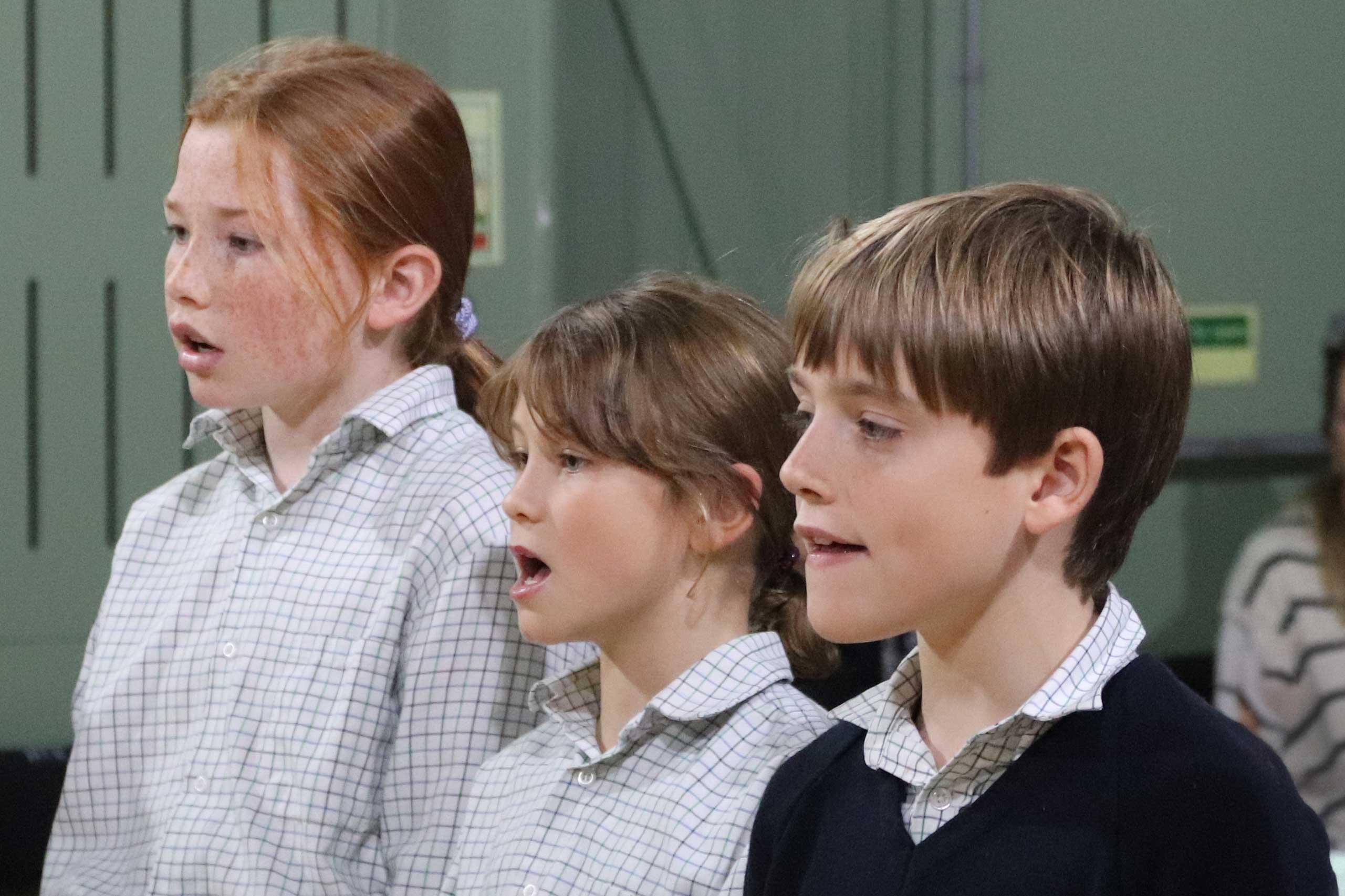
At Highfield and Brookham, singing is embedded into everyday school life. Through assemblies, choirs and extra-curricular opportunities, music-making is normalised, helping children overcome the fear of “getting it wrong” and encouraging participation for all.
Most importantly, every child is given regular opportunities to perform, enjoy and share music, regardless of experience or confidence, starting with their very first songs in Nursery. We actively promote music through multiple choirs and ensembles, year-group performances, concerts, bands, rock club, Highfest and the House Performing Arts competition. Weekly curriculum music lessons are taught by specialists, while creativity is further nurtured in our Music Technology suite, where pupils compose and produce original work.
Instrument taster sessions in Years 2-4 spark curiosity and confidence, helping pupils find what truly inspires them. With expert peripatetic teachers and a wide range of instrumental and singing opportunities, musical potential is supported and developed at every stage. Our most recent ABRSM results reflect the children’s passion for music, achieving an outstanding 100% pass rate from Initial to Grade 6.
Looking Ahead
Music builds confidence, community and creativity. It gives children a voice, quite literally, helping them feel part of something bigger than themselves.
Suzannah Cryer, Head, Highfield and Brookham School: “I am passionate about the broad and enriching education we offer, and the vital role singing and music play in building confidence, wellbeing and academic success. As parents, educators and policymakers look to the future, the challenge is not simply to preserve music and singing in schools, but to ensure every child has the opportunity to experience its joy. I personally love joining our pupils on stage singing and am always thrilled to perform at our annual Highfest event. At Highfield and Brookham we are proud to play our part in keeping music and singing alive at the heart of education.”